|
May 19, 2026 | Vol. 4, No. 20
|
|
|
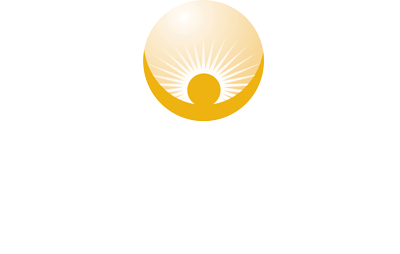
What’s in a logo?

To assist our collective engagement with CSHA history, I asked long-standing member Raja Sekaran to share a memory around the 2007 adoption of our logo. Here’s what he had to say:
The current logo was adopted during the Presidency of Robert Valencia, then a lawyer at Catholic Healthcare West (later Dignity Health, now CommonSpirit Health), and formerly of Hooper Lundy & Bookman. Robert wanted to leave his mark on CSHA and found the logo at the time—which included the scales of Justice and a caduceus along with two other images—to be clichéd (it was).
I remember the budget for the design and trademarking was generous and there was some debate about whether this was a good use of CSHA’s funds. However, we were running a large surplus at the time and, admittedly, the prior DIY approach had led to the scales of Justice, etc. So, the project and designer were approved.
Next came the task of providing guidance to the designer. This led to a Board discussion of the organizational qualities we wanted to emphasize and promote through the logo. I remember one of CSHA’s founders, Art Chenen, saying the selections of the words “Society” and “for” in CSHA’s name were intentional. What kind of a society did we want CSHA to emulate for its members? We knew we wanted to avoid any impression that CSHA would be heavy, cloistered, or fusty.
I seem to remember there being three designs to choose from. Significant debate ensued. In the end, we chose the design that spoke to those qualities we sought to promote: The outstretched arms of the anonymous figure signaled Inclusivity and an embracing of health lawyers from various sectors and even opposing sides of disputed matters. (During my subsequent Presidency, I liked to say CSHA is like Camp David for health lawyers.) The color scheme invoked California as the Golden State. Both the color and the design’s solar quality conveyed CSHA’s goal of Illuminating challenging topics and bringing Warmth to its members.
The armchair psychologist in me says a logo’s impact must result from the sum of its parts. Hopefully, deconstructing the logo (and its history) as I’ve done here, adds and does not diminish our appreciation of it.
Raja Sekaran, CSHA Past President & Managing Partner of Epstein Becker Green’s S.F. Office
***
Thanks, Raja!
I’d love to share other tidbits of CSHA lore with the group. If you’ve got something to share, please drop me a line at daynanicholson@dwt.com.
-Dayna |
|
|
|
Have a timely healthcare law topic to share with the CSHA community?
CSHA is now accepting proposals for our Summer Webinar Series. We’re looking for engaging, practical presentations on healthcare regulatory, operational, transactional, privacy, AI, and policy topics — and innovative ideas are especially encouraged.
Selected programs will be presented as 60-minute webinars for CSHA members this summer.
View proposal details and submission information on the event page.
Proposal deadline: June 19, 2026 |
|
|
|
The California Legislature and Governor have proposed several measures to address the growing distressed hospital crisis in the state. Most recently, Governor Gavin Newsom signed Assembly Bill 108, which established a limited-term distressed hospital grant program administered by the California Department of Health Care Access and Information (HCAI). The measure appropriates $25 million in one-time funding for grants to eligible distressed hospitals. To qualify for funding under AB 108, a hospital must satisfy the following criteria:
- The hospital must be a not-for-profit hospital or a public hospital.
- The hospital must have less than ten (10) days’ cash on hand, inclusive of investments and liquid assets available for operations, based on internally prepared financial statements for the most recently closed month and supported by the most recent audited financial statements.
- The hospital must demonstrate that it used best efforts to exhaust other financial options, including seeking forgiveness or deferral of short- and long-term debt obligations.
- At least 50 percent of the hospital payor mix must consist of government payers and uninsured patients.
- The hospital must satisfy any additional criteria established by HCAI in consultation with the Department of Finance.
Eligible hospitals were required to submit a completed application to HCAI yesterday, Monday May 18th.
Senator John Laird, the Chair of the Senate Budget and Fiscal Review Committee, publicly noted during budget discussions that Watsonville Community Hospital could potentially benefit from the program. However, legislators from both parties expressed concern during budget hearings that the eligibility criteria are narrowly tailored and may exclude many financially struggling hospitals.
The $25 million grant program is not the only form of hospital relief currently under consideration. In the Governor’s 2026-27 May Revision, Governor Newsom proposed an additional $50 million in distressed hospital grant funding, utilizing substantially similar eligibility criteria as those established under AB 108. However, the Governor’s proposal remains significantly lower than the funding level proposed in Assembly Bill 1923, authored by Assemblymember Esmeralda Soria and sponsored by the California Hospital Association.
Under existing law, California’s Distressed Hospital Loan Program provides interest-free loans to nonprofit and public hospitals experiencing significant financial distress in order to prevent hospital closures or facilitate hospital reopenings. Cal. Health & Safety Code Section 129380. AB 1923 would substantially expand the scope of Distressed Hospital Loan Program by permitting hospitals of any ownership type or system affiliation to qualify for state assistance if HCAI and the California Health Facilities Financing Authority determine that the hospital is experiencing financial distress. Among other provisions, AB 1923 would:
- Expand the definition of “financial distress” to include both prior and projected financial performance metrics, including credit ratings and debt capacity. The bill contemplates consideration of impacts associated with federal and state policy changes affecting reimbursement and coverage.
- Require applicant hospitals to submit financial reports and consolidated financial statements from associated entities, where applicable, for HCAI review.
- Limit eligibility for hospitals with associated entities unless those associated entities are determined to lack the financial capacity necessary to resolve the hospital’s distress.
- Impose additional limitations on loans to hospitals with associated entities, including reducing loan amounts by amounts distributed to investors, shareholders, or management companies during the preceding three years.
- Define “associated entities” broadly to include affiliates, subsidiaries, and other entities exercising financial or governance control over the hospital, whether foreign or domestic.
- Require HCAI to consider imposing conditions on loans, including maintaining labor and delivery services, Medi-Cal participation, Medi-Cal managed care participation, county contracts, and community benefit or charity care obligations.
- Appropriate $300,000,000 from the General Fund to the Distressed Hospital Loan Program Fund to support additional rounds of hospital stabilization funding.
Since the creation of the Distressed Hospital Loan Program, the program has assisted fourteen hospitals in remaining operational and facilitated the reopening of one hospital. With the Governor now proposing an additional $50 million in distressed hospital grant funding, the Legislature may consider whether additional appropriations are justified as part of ongoing budget negotiations. The Legislature must pass the state budget by June 15, 2026. |
|
|
|
By:
Magaly Zagal
Greenberg Traurig LLP
|
|
|
|
Jonathan M. Herman, P.C. - Los Angeles - Full-Time
|
|
|
|
Epstein Becker Green - San Francisco - Full-Time
|
|
|
|
Nossaman, LLP - San Francisco - CA - Full-Time
|
|
|
|
Nixon Peabody - Los Angeles - Full-Time
|
|
|
|
|
|
|
|
|
The California Society for Healthcare Attorneys (CSHA) is a membership organization for those practicing healthcare law in one of the largest and most dynamic states in the nation. Our members represent all aspects of the industry including hospitals, physicians and medical groups, health plans, research companies, nonprofit agencies, government and academia.
|
|
|
CONTACT
|
|
California Society for Healthcare Attorneys
907 3rd Street
#155
Davis, California 95616
|
|
|